Wednesday, May 31, 2023

Embracing the Timeless Elegance: The Advantages of Hardcover Books

 In an era dominated by digital media, the allure of physical books remains steadfast. Among the various formats available, hardcover books possess a unique charm that captivates book enthusiasts and collectors alike. In this blog post, we will delve into the advantages of choosing hardcover books and explore the scenarios in which they are the ideal choice. So, let's embark on a journey through the world of hardcovers, appreciating their durability, aesthetic appeal, enhanced reading experience, and the delight they bring to collectors.

Durability and Longevity One of the most prominent advantages of hardcover books lies in their exceptional durability and longevity. The rigid cover provides robust protection to the delicate pages, ensuring they remain intact over time. Unlike their paperback counterparts, which are prone to creasing and wear, hardcovers can withstand the rigors of regular use, making them a valuable investment for avid readers or individuals looking to build a personal library. The sturdiness of hardcovers also ensures that they can be passed down through generations, becoming cherished heirlooms that carry the stories and memories of their owners.

Aesthetic Appeal and Visual Pleasure Hardcover books possess an inherent visual appeal that cannot be denied. The sturdy exterior, often adorned with intricate designs, lends an air of elegance and sophistication to any bookshelf. The craftsmanship involved in creating hardcovers is evident in the attention to detail, from the embossed titles to the gilded edges that catch the light. Hardcover editions are often released with special features like foil stamping, debossing, or dust jackets that enhance their visual allure. Owning and displaying a collection of beautifully bound hardcover books can bring immense pleasure, as they contribute to the aesthetics of a room and serve as conversation starters for guests.

Enhanced Reading Experience The physical attributes of hardcover books contribute to an enhanced reading experience. The weight and solidity of the book provide a substantial feel, immersing readers more deeply into the narrative. The larger format of hardcovers allows for spacious typesetting, which enhances readability and reduces eye strain. Additionally, the flat opening of hardcovers ensures that pages remain open without the need for constant holding, allowing readers to comfortably engage with the text for extended periods. The tactile experience of turning the pages of a hardcover book, feeling the texture of the paper, and smelling the faint scent of ink creates a multisensory journey that adds to the pleasure of reading.

Collector's Delight Hardcover books hold a special place in the hearts of book collectors. They often feature limited edition releases, signed copies, or special editions with exclusive content, making them highly coveted among enthusiasts. Collecting hardcovers can become a fascinating and rewarding hobby, with dedicated individuals seeking out rare editions, first editions, or books with unique bindings. The value of certain hardcovers may appreciate over time, adding an element of investment potential to the hobby. The joy of discovering a treasured hardcover edition in a used bookstore or completing a series with matching hardcovers brings a sense of fulfillment and satisfaction that collectors cherish.

When to Choose Hardcover Books While the advantages of hardcover books are clear, it's important to consider when they are the ideal choice. Here are some scenarios where opting for hardcovers makes perfect sense:

  1. Collectible editions: If you are a passionate book collector or simply enjoy owning limited edition or signed copies, hardcovers are a must-have. These editions often hold sentimental or financial value, making them highly desirable additions to your collection.

  2. Long-term reading: If you plan to read and revisit a book multiple times, hardcovers provide the durability necessary to withstand repeated use. They can endure the test of time, ensuring that your favorite stories remain intact for years to come.

  3. Gifting: Hardcover books make exceptional gifts, particularly for special occasions or to commemorate important milestones. The beauty and longevity of hardcovers add an extra touch of thoughtfulness to the act of giving, allowing the recipient to cherish the book as a keepsake.

Conclusion: In a world that often embraces digital convenience, choosing a hardcover book offers a respite—a tangible connection to the past and a timeless elegance that enhances the reading experience. The durability, aesthetic appeal, enhanced reading experience, and the delight they bring to collectors make hardcover books a worthy choice for book lovers. So, the next time you peruse a bookstore or curate your personal library, consider the advantages of opting for a hardcover book and indulge in the joy of holding a beautifully bound treasure in your hands.

Source: Advantages of Elegant Hardcover Books

Monday, May 8, 2023

Tips for Using the Perfect Binding Method for Bookbinding

Perfect binding is a popular bookbinding technique that is used to create high-quality, professional-looking books. It is commonly used for paperback books, magazines, and catalogs, among others. If you're new to bookbinding or looking to perfect your perfect binding skills, there are a few tips that can help you achieve great results.


  1. Invest in quality materials: One of the keys to successful perfect binding is using high-quality materials. This includes choosing the right type of glue and paper stock. It is recommended to use a hot melt glue for the binding process and paper that is suitable for the glue.

  2. Use a scoring machine: Scoring machines can be used to crease the spine of the book cover, which will make it easier to fold and align the pages. This will also prevent the cover from cracking or tearing when the book is opened.

  3. Take time to prepare the pages: Before binding your book, it is important to prepare the pages by trimming them to the correct size and ensuring that they are aligned properly. This will ensure that the pages fit neatly into the spine of the book.

  4. Pay attention to the glue application: Applying glue evenly is critical to the success of the perfect binding process. Too much glue can cause the pages to stick together, while too little can cause the pages to fall out of the book. It is important to follow the manufacturer's instructions for applying the glue, which may include using a glue roller or brush.

  5. Allow adequate drying time: After the pages have been glued and inserted into the spine of the book, it is important to allow sufficient time for the glue to dry completely. This will ensure that the pages stay in place and that the spine remains strong.

  6. Use a book press: Using a book press can help ensure that the pages are held securely in place while the glue dries. A book press can be made by placing the book between two pieces of wood and using clamps to hold them together.

  7. Finish the book cover: Once the glue has dried, you can add the book cover. This can be done by attaching a cover using glue or tape. You can also add a title or design to the cover using foil stamping or embossing techniques.

By following these tips, you can achieve great results when using the perfect binding method for bookbinding. With practice and attention to detail, you can create professional-quality books that are sure to impress.

Source: Perfect binding method for bookbinding

Wednesday, May 3, 2023

Why you should consider hardcover books for your next project

 If you are considering publishing your next book, whether it's a novel, memoir, or non-fiction work, you may be wondering which format is best. While paperback books are a popular choice, you may want to consider opting for hardcover books instead. Here are some reasons why hardcover books may be the perfect choice for your next publishing project:

  1. Durability

One of the main benefits of hardcover books is their durability. Hardcover books are made with a sturdy cover that is designed to protect the pages inside. This makes them a great choice for books that will be read multiple times or that will be passed around among friends and family. Hardcover books are also less likely to get damaged in transit or while being stored, which can save you money in the long run.

  1. Aesthetics

Another advantage of hardcover books is their aesthetic appeal. Hardcover books are often considered more luxurious and high-end than paperback books. They make great gifts and are ideal for collectors or book enthusiasts who want to display their books on a bookshelf. A well-designed hardcover book can also make a statement and attract readers to your work.

  1. Longer Lifespan

Because of their durability, hardcover books have a longer lifespan than paperback books. Paperback books are typically made with a soft cover that can wear down over time, causing the pages to become loose or fall out. Hardcover books, on the other hand, are designed to last for years, making them a great investment for both readers and publishers.

  1. Increased Perceived Value

Hardcover books are often priced higher than paperback books, which can increase the perceived value of your work. Readers may be willing to pay more for a hardcover book, especially if they see it as a valuable addition to their book collection. This can also benefit publishers, who can generate more revenue per book and increase their profit margins.

  1. Professionalism

Hardcover books are often seen as more professional than paperback books. If you are a new author or a self-publisher, investing in hardcover books can help you establish credibility and build a professional image. This can also help you stand out in a crowded market and attract more readers to your work.

  1. Customization

Hardcover books offer more customization options than paperback books. You can choose from a range of cover materials, including cloth, leather, and embossed covers. You can also add features like dust jackets, foil stamping, and embossed lettering to make your book stand out. This allows you to create a unique and memorable design that reflects the content of your book.

In conclusion, hardcover books offer a range of benefits that make them an excellent choice for your next publishing project. From their durability and aesthetics to their longer lifespan and perceived value, hardcover books can help you create a professional and high-quality product that will attract readers and stand the test of time. Source: Why Choose Hardcover Books

Monday, March 27, 2023

How to creatively use printed booklets to market your business


 Printed booklets are an effective way to market your business and communicate important information to your target audience. They provide a tangible and interactive experience that can engage potential customers and leave a lasting impression. In this blog post, we’ll explore some creative ways to use printed booklets to market your business.

  1. Share your story

Printed booklets are an excellent way to share your brand's story with your audience. Use the booklet to showcase your company's history, mission statement, and values. Include personal anecdotes or testimonials to add a personal touch and connect with potential customers on a deeper level.

  1. Highlight your products or services

Printed booklets can also be used to showcase your products or services in a creative way. Use high-quality images, detailed descriptions, and customer reviews to highlight the benefits of your offerings. Make sure to include contact information and a call to action so potential customers can easily make a purchase or request more information.

  1. Provide educational content

Another way to use printed booklets is to provide educational content related to your industry. This can include how-to guides, tips and tricks, or industry insights. Providing valuable information can position your brand as a thought leader in your industry and build trust with potential customers.

  1. Create a catalog

Printed booklets can also be used as a catalog to showcase your product line or services. Use clear and concise descriptions, high-quality images, and pricing information to make it easy for potential customers to browse and make a purchase. Make sure to include contact information and a call to action so customers can easily order or inquire about products or services.

  1. Offer exclusive promotions

Printed booklets can also be used to offer exclusive promotions to potential customers. Include coupons or discount codes that can only be redeemed with the booklet. This can incentivize potential customers to make a purchase or visit your website.

  1. Provide a guide or manual

If your products or services require some explanation, printed booklets can be used as a guide or manual to help customers understand how to use them. Use clear instructions and diagrams to make it easy for customers to use your products or services.

  1. Share customer success stories

Another creative way to use printed booklets is to share customer success stories. Include testimonials or case studies that showcase how your products or services have helped customers. This can help build trust with potential customers and demonstrate the value of your offerings.

In conclusion, there are many creative ways to use printed booklets to market your business. Whether you want to share your brand's story, highlight your products or services, provide educational content, create a catalog, offer exclusive promotions, provide a guide or manual, or share customer success stories, printed booklets can be a powerful tool in your marketing strategy. Make sure to use high-quality images and engaging content to capture your audience's attention and leave a lasting impression. Source: Discover creative ways to market with booklets

Wednesday, February 22, 2023

Beneficial Features of Using Lithographic Printing


One would probably imagine that a printing technique which was invented in the 18th century would be out-of-date by now. But lithographic printing has evolved over the years and its modern version continues to be a popular and practical option for printing. This form of printing, also called litho, offset, or plate printing, was invented in 1798 as a modern alternative to copperplate engraving which was the prevalent technology.


Despite the growing popularity of digital printing over the last 25 years, litho printing is still used for printing magazines, hardcover books, brochures, catalogs, and also for booklet printing. So, let’s see what makes this technology still relevant and popular.


What is Lithographic Printing?

In this printing technique, the image of the content to be printed is placed on a plate. This plate is then covered in ink and the material is placed against this plate. The inks from the plate are absorbed onto the material. The initial setup of creating the plates and preparing the inks is time-consuming and requires precision. The inks must be mixed precisely and used in the correct order. The output is of high quality with precise and vibrant colors.


Since the initial preparation takes more time, litho printing is more suitable for large runs. If you need book printing services for a small number, then digital printing would be a better option. However, the high-quality print and precision obtained with litho printing makes it a practical choice in many situations.


What are the Advantages of Litho Printing?

When it comes to book printing, Melbourne vendors offer many different techniques like digital, flexography, screen, and lithographic printing. Whether you are looking at printing hardcover books, manuals, flyers, or booklet printing, the technique you opt for will depend on the desired finished look, budget, volume of the print run, and timeframe. Let us see how litho printing stacks up under these parameters so you can decide if it is a good fit for your printing requirement.


Advantages of Lithographic Printing


Quality –

Litho printing is the best option for high-quality printing on a smooth surface. This printing technique gives output that is high in sharpness and clarity. With this method, you can do long runs of printing without losing quality. This makes litho printing a great choice for printing art reproductions, posters, and for custom book printing with images and illustrations. Another advantage of this method is that it does not leave impressions on the back of the page, which not only gives a better reading experience, but it also keeps the book light.


Cost-effectiveness –

With lithographic printing, the unit cost decreases as the quantity increases. This makes it a great option for bulk printing. The main cost component is that of the initial setup. Every subsequent rerun is very cost-effective. So, even if your need is for custom book printing but with chances of follow-up reruns, you should consider this printing method. It will be easy on your pocket in the long run.


Versatility –

Litho printing has the distinct advantage that it can be used for a variety of paper weights and types. You can also opt for different finishes like glossy and matte. In fact, you can use this method of printing on other surfaces too if it is smooth and practical. So, you can get creative with your printing surface by exploring materials like leather, wood, cloth, plastic, metal, etc.


Time efficiency –

The creation and preparation of the plates takes time. But the printing itself is very efficient. With litho printing, you can get a printing speed of over 50,000 sheets per hour. This speed makes this method such an attractive option for large print runs and for book printing services that require reruns.


Conclusion

So, if you are looking for book printing services that work well for high volume and yield high-quality output, then lithographic printing is an excellent choice for you. The newer advancements made in this technology make it a great option for printing hardcover books, magazines, art reproductions, and even booklet printing.


When it comes to book printing in Melbourne, look no further than Print Books. We have over 20 years of experience in printing using different techniques. Our design and print teams excel at understanding the client’s needs and offering printing solutions and services best suited to those needs. Whether it be large runs or small ones, our team delivers quality within your budget. So, what are you waiting for? Contact us now to get a free consultation.

Source: Advantages of lithographic printing

Thursday, February 2, 2023

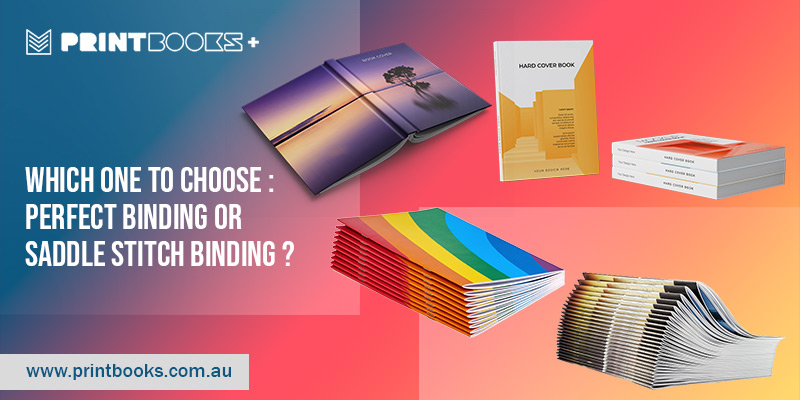
Perfect Binding vs. Saddle Stitch Binding: Which is the Best Option?

 If you are looking to get a book printed, you certainly have to look at options for book binding. You will be surprised at the variety of options available for binding. It can get confusing to decide which is the best book binding option for your book. You can choose from perfect binding, binding for hardcover books, wire binding, spiral binding, saddle stitch binding, etc.

The two most popular types of binding used in book printing in Melbourne are perfect binding and saddle stitch binding. We deep dive into these and explore their advantages and disadvantages so you can decide which one of these two book bindings is ideal for your book.

What is Saddle Stitch Binding?

In this method of book binding, the sheets of the book are nested inside one another and stapled along the inside fold. It is mostly used for brochures, programs, thin magazines, etc. These are ideal for book and booklet printing of up to 48 pages. As the pages are cut flush with the cover, as you go to the center of the book the pages get smaller in size. This is called creep. With a higher page count, the creep will be far more noticeable and hence, this method is ideal for thinner books.

Pros and Cons of Saddle Stitch Binding

Let us consider the advantages and restrictions of this book binding technique.

Merits of Saddle Stitch Binding

  • Saddle stitch binding is one of the most widely available techniques and is very cost-effective. So, it is ideal for regularly published books and booklet printing.
  • The delivery of books bound using this method can be fulfilled in far less time than many other book binding techniques.

Demerits of Saddle Stitch Binding

  • There is a limitation on the page count with this method as the staples can fall off easily with a higher number of pages and also because of the creep that sets in with more pages.
  • Customizability with paper type is much lower with saddle stitch binding. This is because the two pages on each side of the fold will be the same. So, you can’t, for example, have colored sections in this method.

Perfect Binding vs Saddle Stitch Binding

What is Perfect Binding?

In perfect binding, the book has a flat spine to which the books are glued with adhesives like PUR glue. It is best suited for books with a page count of over 96 pages. Perfect binding is used for most soft-cover books like magazines, catalogs, manuals, comics, etc. Sometimes, this technique is also used for hardcover books.

Pros and Cons of Perfect Binding?

Let us look at some of the merits and demerits of perfect binding.

Merits of Perfect Binding

  • Perfect binding gives a cleaner and more professional appearance to the book.
  • This technique of book binding also makes the book more sturdy and durable.
  • As the spine of books bound using this method is flat, it can be used for printing information about the book. When the book is placed vertically with the spine side out, the copy on the spine helps the book to stand out. So, this is great for books that need to be displayed in bookcases, bookstores, etc.
  • There is more scope for customizability with the pages in perfect binding. For example, if you are getting a diary printed, you can use pages of different colors, textures, and finishes when using perfect binding.

Demerits of Perfect Binding

  • In comparison to saddle stitch binding, perfect binding is a little more expensive. While this may not be a factor when getting just one or two books printed, it will be a significant amount if you are placing a print order for a large number of books.
  • When opting for perfect binding for book printing in Melbourne, keep in mind that this method has a higher turnaround time than saddle stitch binding.
  • Perfect binding does not work very well for books that need to be read hands-free like recipe books, instruction manuals, etc.

Which One to Choose: Perfect Binding or Saddle Stitch Binding?

There is no right or wrong choice between perfect binding and saddle stitch binding. Both are easily available, and both have their pluses and minuses. This choice will depend on factors like the desired final look of the book, the budget for printing, and the purpose of the book. For example, if you want a more classic look and a printable spine, go for perfect binding. Or if you are looking for a faster and cheaper print, opt for saddle stitch binding. Both techniques are widely available as options for book printing in Melbourne.

Winding Up

Both perfect binding and saddle stitch binding have their advantages and are suited for different kinds of books. Using the above analysis, you can conclude which of the two types of book binding will be perfect for your book. Whichever book binding technique you finally decide to use, you will need to engage a company with experience and expertise in book printing in Melbourne.

Our team at Print Books not only delivers high-quality book and booklet printing but also offers advisory services on the binding technique. We believe in offering our customers solutions that are tailored to their needs. We are experts in delivering premium printing and book binding services at highly competitive rates. The best part is you get all this with a very low turnaround time. Book a free consultation with our team now.

Wednesday, January 25, 2023

10 Tips for Printing a Perfect Booklet

 A well designed marketing booklet leaves a positive impression on customers. You can use booklets as a reference when making the important decisions. Depending on your business needs, booklet printing can be done as tradeshow contributions, employee handbooks, enrollment booklets and much more. Even you can buy customisable booklets which is available in many shops. Event information, date, time, growth reports, attention-grabbing visuals, and headlines can all be compiled into a single booklet. You can get a variety and attractive booklets from booklet printing in Melbourne.

Here are the tips for printing a perfect booklet:

Choose the perfect sort of binding


Books are thicker than booklets, which are bound periodicals. It is advised to use a simple saddle stitched booklet with fewer pages as it provides more convenience. Choose perfect binding if your document has 20–240 pages or more. A paper cover and glue are used to hold the spine of this elegant style of binding together.


Choose the booklet size

You need to pay apparent attention to the size rather than other things. Your audience should come first when determining the ideal size for your booklet. While brand image and printing costs are significant considerations, you don’t want to make these choices at the expense of your booklet’s readers because their impressions count the most. The saddle stitched booklet is more attractive and helpful to your audience, adopting a user-friendly approach.

Leave the space for the binding

Your booklets will be sliced using a cutting blade during the cutting process, which may or may not fall precisely every time. Additionally, the binding will take up a portion of your page’s space. According to the type of book binding you have chosen for your booklet, you must thus leave some additional room for trimming and binding.

Organise the content

It is crucial to organise the information offered in your booklet. It is readable and presented in the correct sequence for the readers to review. Avoid cramming too much information onto a single page, and don’t forget to provide your contact information so that the readers can contact you if they need more information. Choosing book printing in Melbourne is the ideal option; they give the booklets at a given time.

Consider the front cover artwork

Your booklet will seem more professional and protect the interior pages if the front and back are printed on heavier gsm paper. When a magazine omits cover pages, it is said to be self-covered. Consequently, a booklet’s cover is effectively the first page. It may flex readily, earning it the nickname floppy. Your front cover of booklet printing is essential to the success of any booklet printing project, whether it be for newsletters, periodicals, or business reports. Save your primary message for the front and ensure it is properly thought out and written.

Lamination

Your cover papers should always be laminated, which gives the perfect book binding. It dramatically improves the presentation of publications, catalogues, and brochures. Most significantly, it also shields against deterioration. Therefore, you should give a silk cover paper matte lamination if you have one. Also, a gloss lamination of saddle stitched booklet will make a gloss cover paper extra shiny. Laminating is not recommended for uncoated cover paper. This type of paper does not adhere to the finish very well, which would negate the whole purpose of selecting an uncoated paper in the first place.

Match the colour

It truly comes down to whether the colour is more advantageous for your goals than the cost-effectiveness of choosing black ink when choosing between colour and black ink. Readers’ first impressions of your booklet printing are greatly influenced by colour, which dramatically affects them. Colour is the finest option if you want to increase readership or sales of your products. On the other hand, if your booklet contains primarily educational text, such as a product manual, and colour ink offers no real advantage, think about the money-saving benefits of using black ink.

Selecting the top online printer

Your booklet’s success depends on the online printer. You may locate your desired online booklet printing business with little investigation. Since most online printing businesses will inevitably market their expertise in booklet printing or incredibly low pricing, the search process may be daunting. Get a quote, request samples, and check for reliable endorsements and reviews in the online platform. Printing sample package that will arrive at your door in a matter of business days, booklet printing in Melbourne provides handy online pricing.

Know the page count

Include the front, rear and inside covers when counting booklet pages. The front cover is page 1, and the inner left cover is page 2, and so on. Make sure the total number of pages in your booklet is a multiple of four if you choose that option. A saddle stitched booklet is a folded document of one or more sheets with four pages or panels. Four two-sided spreads would make up a booklet with 16 pages if constructed in this manner. If you choose a perfect bound book, make sure the total number of pages is a multiple of two.

Branding

Presentation is crucial to the success of your project. Some clients believe that perfect bound books give their booklet a more distinctive or striking vibe that effectively displays their brand image. A 10 x 10 square booklet can be the format of choice for the accessories catalogue of an automaker that takes pleasure in innovation and coolness. The extra expense may be justified because custom sizing may be a significant component of your brand.

Bottom line

Standard booklet printing in Melbourne can be expensive. That’s why we put together these booklet printing tips to help you save money so you can get your printing done affordably.

Standard vs. Custom Book Dimensions: How to Choose the Perfect Size for Your Book

  Why Book Dimensions Matter More Than You Think When authors think about publishing a book, they often focus on the manuscript, cover desig...