Monday, November 28, 2022

When to Choose Hardcover Books and the Benefits of Hardcover


 When you walk past a bookstore why are your eyes drawn to the shiny hardcover books on the display? While waiting at a lounge, why do you find yourself picking up the hardcover coffee table books and perusing them? This is the magic and pull of hardcover books. The editor of Bookseller magazine said in the Guardian that “the hardback is a mark of quality…it shows booksellers and reviewers that this is a book worth paying attention to”.

Till a few years ago, all books came in hardback format. Over the last few years, many other types of bookbinding have come into the market, but hardcover binding still has a special place in the world of books. Let us see what makes this format a cut above the rest and, in what situations this format is best suited for bookbinding.

What is Hardcover Binding?

There are many types of bookbinding that are used today. Some of these have been in practice for thousands of years! There are four techniques that are most used in current times:

  1. Saddle-stitched – This is the most widely used and is a technique that is easy on the pockets. A saddle-stitched book has two pieces of wire passed through the centerfold of the book to grip the pages together
  2. Perfect binding – In this method, the pages are held together using PUR glue and are then attached to the cover. This technique is called perfect binding as, during the binding process, the book pages and cover are cut to the same size so that they align perfectly with each other.
  3. Spiral binding – Books bound in this fashion have their pages punched with holes along the inner margin and a plastic wire inserted through the holes to hold the pages together.
  4. Wire-O binding – This method is similar to spiral binding. Instead of a plastic coil, a looped metal wire is used, giving the book a more professional look. In wire-o binding, as in spiral binding, the book can be kept flat on a surface when open and can also be folded 360 degrees without spoiling the book.

Hardcover binding is a longer and more complex process. It involves the creation of the hardcover using cardboard paper. The cover of the book is then printed and laminated and stuck on the outside of the hardcover. This is followed by the inside pages getting printed and cut to uniform size. These are then stuck together and to the hardback using PUR glue.

The complexity of the process makes hardcover binding a more expensive option than the other types of binding. But it is still a very popular option. Let us see why.

What are the Advantages of Hardcover Binding?

There are many benefits of hardcover binding which make it a top choice for many books. Few of them include:

  • The main reason is that hardcover binding increases the longevity of the book. Hardcover books can withstand frequent handling and can have pride of place for years on your bookshelf. This durability makes hardback a great option for children’s books, yearbooks, and academic books.

  • Hardcover binding lends a book a look of credibility and a touch of class. Hardback books stand apart from books bound using other techniques. This is one of the reasons you see books with hardbacks on the display in bookstores. So, if you are thinking of gifting a book or printing a special book for a birthday or anniversary, hardback binding is what you should choose.

  • The unique process of creating the cover for hardback books allows different options of finishing for the cover that are not available in other types of binding. You can choose between glossy and matte, and also from custom leather, marbling, handwork, and other options.

We have seen the advantages of hardback binding. But, given that it is a relatively more expensive option, let us see when to choose this type of bookbinding.

When to Choose Hardcover Binding?

Hardcover binding gives you top-notch quality books. But is this binding the best choice in all cases? Let us check them out.

  • Hardcover binding is a good option for books that have more than 50 pages. It is particularly suited for thicker books as it helps increase the life of the printed book. However, for books with very few pages, you can consider one of the other types of binding.

  • If you are getting a book printed that will undergo a lot of handling – like children’s books – then hardback binding is an ideal choice. It also works very well for books you expect to be on the shelf for many years like collector’s editions or yearbooks.

  • Hardcover books have a flat spine that can be customized, and which will be easily visible when your book is placed on the shelf. So, if you are looking at creative covers and spines then hardcover binding is the best option.

  • Books bound as hardbacks look elegant and classy. So, if you are looking at books that need to be gifted no other kind of binding will give the look that hardcover binding does.

Coming to an End sheet!

Hardcover binding has many advantages and is the best choice if you are looking for durability and quality. It is versatile and lends itself well to all types of books. It also allows for amazing creativity with the cover and spine of the book, making these books a very attractive addition to your bookshelf.

If you want your money’s worth you should opt for a printer who has the experience and infrastructure to deliver high quality printing and binding. You get all this when you come to Print Books. With over 20 years of experience, the team has built a fantastic record over the years for high-quality printing with fast turnaround times. We use the latest technology to deliver on our commitments to customers. Our creative team has the knack for understanding your needs and designing books and covers that will give you 100% satisfaction.

Wednesday, November 2, 2022

Offset vs. Digital Printing: Which printing method is right for you

 If you’re in the market for brochures, business cards, posters, or other marketing materials, you already know how imperative it is to create the right style, colour scheme, copy, and layout. There is still one more crucial choice to make: choosing between digital and offset printing.

Is digital printing superior to offset printing? It’s a common question, yet the response is not as simple and straightforward as you might expect. Naturally, the answer is either “yes or no”, but it really does depend on your printing needs. To determine which is superior for printing your marketing materials, let’s examine the distinctions between offset printing and digital printing.

For decades, offset printing which has been around for more than a century was the ideal method for printing nearly all commercial materials, including newspapers, magazines, booklets printing, advertising, postcards, and brochures. Ink is often transferred from a plate to a rubber sheet in offset printing, which subsequently rolls the ink onto paper, vinyl, or another surface. Digital printing, on the other hand, does not utilise plates to transfer ink to paper.

We’ll discuss the distinctions between the two printing methods in this blog and illustrate their advantages and disadvantages. We’ll also provide a list of the considerations you should make while deciding on the appropriate procedure for your job so that you may obtain the best idea of how both digital and offset printing works.

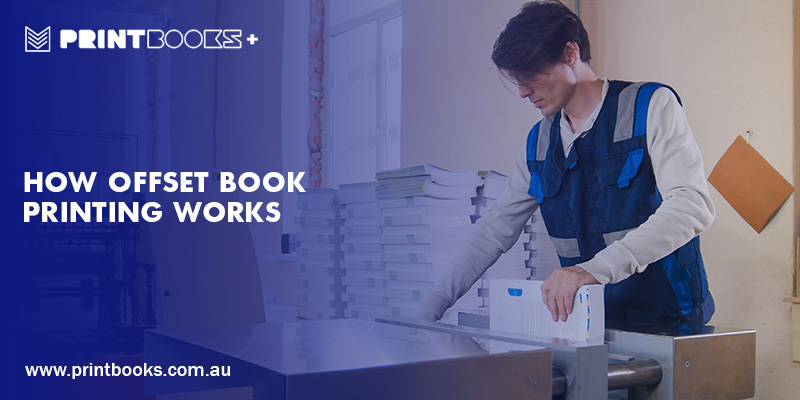
How Offset Book Printing Works

The most frequent printing method used for big volume commercial tasks is offset printing, often known as lithography. Have you ever seen videos of newspapers being rolled up in large rolls? That is what offset printing looks like.

This is how it goes: one metal plate is burned with the design by the printer for each colour. Offset printing enables the use of unique ink colours, most notably Pantone colours, in addition to the conventional four colours (cyan, magenta, yellow, and black (key), or CMYK).

After that, rubber rollers receive the design from the plates. The various ink shades are applied to the rubber, and the paper is then passed through them. To create the final image, the paper layers on colour as it moves through each roll.

Advantages of choosing offset printing

Superior and trustworthy image quality

Offset printing delivers clear, distinct letters and images free of smudges or blemishes.

Better Colour Fidelity

This is also known as colour accuracy and colour balance in the design and relates to the correctness of the colours. Offset printing will naturally produce accurate colour since it can mix unique colour inks for each project.

Equally effective on all materials

This type of printing allows you to have a plethora of materials to choose from without losing out on any quality.

Cost-effective

You get more value for your money on projects with high volume. An offset work starts out very expensive. The plates must be made, which costs money and requires time. Once you’ve invested the money, though, all the materials are prepared, and you’ll spend less on large offset works than on digital prints, which cost roughly the same per piece regardless of how big the job gets.

Offset Book Printing

Disadvantages of Offset Printing

Not fit for low-volume projects

With offset printing, low-volume jobs are expensive due to the initial setup costs.

Time-consuming

You might be stuck with a longer schedule since the plates need to be made.

Worse Fallout

A batch is difficult to repair as you must start the procedure all over again if you miss a typo on a plate, leading to worse consequences in the event of a mistake.

How Digital Book Printing Works

Digital printing more user-friendly. Recall the offset printing pre-press set-up? With digital printing, the entire step vanishes. Instead, one of two techniques, laser or inkjet is employed by these printers. The internal operations of the machine are a little more complex. In general, it entails dotting hundreds of dots of colour directly onto the paper.

Instead of using plates like offset printing does, digital printing can also use toner (found in laser printers) or larger printers that use liquid ink. When printing in smaller quantities, such as a run of 20 greeting cards or 100 flyers, digital printing excels. The capacity to print with varied data is another advantage of digital printing. Each component requires a distinct code, name, or address. This need cannot be met by offset printing.

While offset printing is a great way to create stunning print projects, the best option for many organisations or individuals who don’t need big quantities of 500 or more is digital printing.

Benefits of digital printing

Quick printing

The lack of a setup process allows for a faster turnaround time.

Identical Printing

Every print is the same. You have a lower danger of variances brought on by ink and water imbalances.

Perfect for Low volume

While it is the most cost-effective solution for when you don’t have too many copies to print, the costs eventually criss-cross because offset printing has a lower cost per unit.

Customising certain fields

Digital printing allows you to alter certain fields in each single copy, making it perfect for invites, tickets and other materials that require personalisation.

Disadvantages of Digital Printing

Lack of materials

There are fewer choices for the materials you can print on.

High cost for high volume

Digital printing is not suitable for massive projects

Lower Quality

In comparison, digital printing has less sharpness, crispness, and quality.

There’s no wrong answer!

Whether you choose Offset or Digital printing, it depends on the type of project you’re working on. If you still have questions, our team here at Print Books make book printing in Australia much easier. We are happy to help and provide our 20+ years of experience in digital book printing and hardback printing. We’re the top booklet printers in Melbourne, and pride ourselves in the expertise and service we provide.
Have your manuscript ready?

Choosing the Best Book Binding Style for Professional and Durable Printing Projects

 Selecting the right book binding style is one of the most important decisions in any printing project. The binding not only affects the app...