Wednesday, February 22, 2023

Beneficial Features of Using Lithographic Printing


One would probably imagine that a printing technique which was invented in the 18th century would be out-of-date by now. But lithographic printing has evolved over the years and its modern version continues to be a popular and practical option for printing. This form of printing, also called litho, offset, or plate printing, was invented in 1798 as a modern alternative to copperplate engraving which was the prevalent technology.


Despite the growing popularity of digital printing over the last 25 years, litho printing is still used for printing magazines, hardcover books, brochures, catalogs, and also for booklet printing. So, let’s see what makes this technology still relevant and popular.


What is Lithographic Printing?

In this printing technique, the image of the content to be printed is placed on a plate. This plate is then covered in ink and the material is placed against this plate. The inks from the plate are absorbed onto the material. The initial setup of creating the plates and preparing the inks is time-consuming and requires precision. The inks must be mixed precisely and used in the correct order. The output is of high quality with precise and vibrant colors.


Since the initial preparation takes more time, litho printing is more suitable for large runs. If you need book printing services for a small number, then digital printing would be a better option. However, the high-quality print and precision obtained with litho printing makes it a practical choice in many situations.


What are the Advantages of Litho Printing?

When it comes to book printing, Melbourne vendors offer many different techniques like digital, flexography, screen, and lithographic printing. Whether you are looking at printing hardcover books, manuals, flyers, or booklet printing, the technique you opt for will depend on the desired finished look, budget, volume of the print run, and timeframe. Let us see how litho printing stacks up under these parameters so you can decide if it is a good fit for your printing requirement.


Advantages of Lithographic Printing


Quality –

Litho printing is the best option for high-quality printing on a smooth surface. This printing technique gives output that is high in sharpness and clarity. With this method, you can do long runs of printing without losing quality. This makes litho printing a great choice for printing art reproductions, posters, and for custom book printing with images and illustrations. Another advantage of this method is that it does not leave impressions on the back of the page, which not only gives a better reading experience, but it also keeps the book light.


Cost-effectiveness –

With lithographic printing, the unit cost decreases as the quantity increases. This makes it a great option for bulk printing. The main cost component is that of the initial setup. Every subsequent rerun is very cost-effective. So, even if your need is for custom book printing but with chances of follow-up reruns, you should consider this printing method. It will be easy on your pocket in the long run.


Versatility –

Litho printing has the distinct advantage that it can be used for a variety of paper weights and types. You can also opt for different finishes like glossy and matte. In fact, you can use this method of printing on other surfaces too if it is smooth and practical. So, you can get creative with your printing surface by exploring materials like leather, wood, cloth, plastic, metal, etc.


Time efficiency –

The creation and preparation of the plates takes time. But the printing itself is very efficient. With litho printing, you can get a printing speed of over 50,000 sheets per hour. This speed makes this method such an attractive option for large print runs and for book printing services that require reruns.


Conclusion

So, if you are looking for book printing services that work well for high volume and yield high-quality output, then lithographic printing is an excellent choice for you. The newer advancements made in this technology make it a great option for printing hardcover books, magazines, art reproductions, and even booklet printing.


When it comes to book printing in Melbourne, look no further than Print Books. We have over 20 years of experience in printing using different techniques. Our design and print teams excel at understanding the client’s needs and offering printing solutions and services best suited to those needs. Whether it be large runs or small ones, our team delivers quality within your budget. So, what are you waiting for? Contact us now to get a free consultation.

Source: Advantages of lithographic printing

Thursday, February 2, 2023

Perfect Binding vs. Saddle Stitch Binding: Which is the Best Option?

 If you are looking to get a book printed, you certainly have to look at options for book binding. You will be surprised at the variety of options available for binding. It can get confusing to decide which is the best book binding option for your book. You can choose from perfect binding, binding for hardcover books, wire binding, spiral binding, saddle stitch binding, etc.

The two most popular types of binding used in book printing in Melbourne are perfect binding and saddle stitch binding. We deep dive into these and explore their advantages and disadvantages so you can decide which one of these two book bindings is ideal for your book.

What is Saddle Stitch Binding?

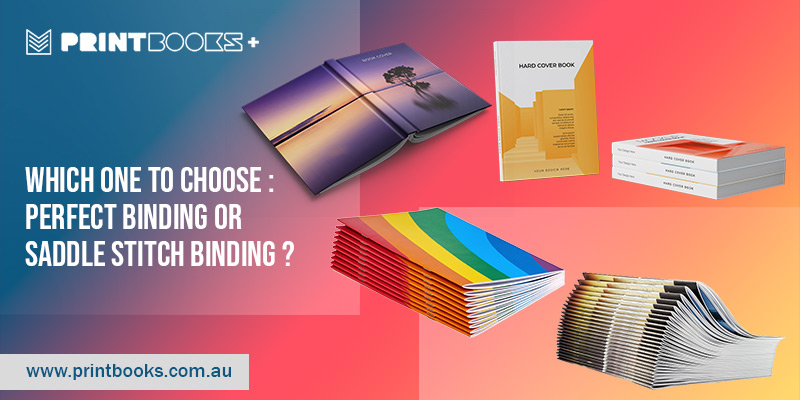
In this method of book binding, the sheets of the book are nested inside one another and stapled along the inside fold. It is mostly used for brochures, programs, thin magazines, etc. These are ideal for book and booklet printing of up to 48 pages. As the pages are cut flush with the cover, as you go to the center of the book the pages get smaller in size. This is called creep. With a higher page count, the creep will be far more noticeable and hence, this method is ideal for thinner books.

Pros and Cons of Saddle Stitch Binding

Let us consider the advantages and restrictions of this book binding technique.

Merits of Saddle Stitch Binding

  • Saddle stitch binding is one of the most widely available techniques and is very cost-effective. So, it is ideal for regularly published books and booklet printing.
  • The delivery of books bound using this method can be fulfilled in far less time than many other book binding techniques.

Demerits of Saddle Stitch Binding

  • There is a limitation on the page count with this method as the staples can fall off easily with a higher number of pages and also because of the creep that sets in with more pages.
  • Customizability with paper type is much lower with saddle stitch binding. This is because the two pages on each side of the fold will be the same. So, you can’t, for example, have colored sections in this method.

Perfect Binding vs Saddle Stitch Binding

What is Perfect Binding?

In perfect binding, the book has a flat spine to which the books are glued with adhesives like PUR glue. It is best suited for books with a page count of over 96 pages. Perfect binding is used for most soft-cover books like magazines, catalogs, manuals, comics, etc. Sometimes, this technique is also used for hardcover books.

Pros and Cons of Perfect Binding?

Let us look at some of the merits and demerits of perfect binding.

Merits of Perfect Binding

  • Perfect binding gives a cleaner and more professional appearance to the book.
  • This technique of book binding also makes the book more sturdy and durable.
  • As the spine of books bound using this method is flat, it can be used for printing information about the book. When the book is placed vertically with the spine side out, the copy on the spine helps the book to stand out. So, this is great for books that need to be displayed in bookcases, bookstores, etc.
  • There is more scope for customizability with the pages in perfect binding. For example, if you are getting a diary printed, you can use pages of different colors, textures, and finishes when using perfect binding.

Demerits of Perfect Binding

  • In comparison to saddle stitch binding, perfect binding is a little more expensive. While this may not be a factor when getting just one or two books printed, it will be a significant amount if you are placing a print order for a large number of books.
  • When opting for perfect binding for book printing in Melbourne, keep in mind that this method has a higher turnaround time than saddle stitch binding.
  • Perfect binding does not work very well for books that need to be read hands-free like recipe books, instruction manuals, etc.

Which One to Choose: Perfect Binding or Saddle Stitch Binding?

There is no right or wrong choice between perfect binding and saddle stitch binding. Both are easily available, and both have their pluses and minuses. This choice will depend on factors like the desired final look of the book, the budget for printing, and the purpose of the book. For example, if you want a more classic look and a printable spine, go for perfect binding. Or if you are looking for a faster and cheaper print, opt for saddle stitch binding. Both techniques are widely available as options for book printing in Melbourne.

Winding Up

Both perfect binding and saddle stitch binding have their advantages and are suited for different kinds of books. Using the above analysis, you can conclude which of the two types of book binding will be perfect for your book. Whichever book binding technique you finally decide to use, you will need to engage a company with experience and expertise in book printing in Melbourne.

Our team at Print Books not only delivers high-quality book and booklet printing but also offers advisory services on the binding technique. We believe in offering our customers solutions that are tailored to their needs. We are experts in delivering premium printing and book binding services at highly competitive rates. The best part is you get all this with a very low turnaround time. Book a free consultation with our team now.

Wednesday, January 25, 2023

10 Tips for Printing a Perfect Booklet

 A well designed marketing booklet leaves a positive impression on customers. You can use booklets as a reference when making the important decisions. Depending on your business needs, booklet printing can be done as tradeshow contributions, employee handbooks, enrollment booklets and much more. Even you can buy customisable booklets which is available in many shops. Event information, date, time, growth reports, attention-grabbing visuals, and headlines can all be compiled into a single booklet. You can get a variety and attractive booklets from booklet printing in Melbourne.

Here are the tips for printing a perfect booklet:

Choose the perfect sort of binding


Books are thicker than booklets, which are bound periodicals. It is advised to use a simple saddle stitched booklet with fewer pages as it provides more convenience. Choose perfect binding if your document has 20–240 pages or more. A paper cover and glue are used to hold the spine of this elegant style of binding together.


Choose the booklet size

You need to pay apparent attention to the size rather than other things. Your audience should come first when determining the ideal size for your booklet. While brand image and printing costs are significant considerations, you don’t want to make these choices at the expense of your booklet’s readers because their impressions count the most. The saddle stitched booklet is more attractive and helpful to your audience, adopting a user-friendly approach.

Leave the space for the binding

Your booklets will be sliced using a cutting blade during the cutting process, which may or may not fall precisely every time. Additionally, the binding will take up a portion of your page’s space. According to the type of book binding you have chosen for your booklet, you must thus leave some additional room for trimming and binding.

Organise the content

It is crucial to organise the information offered in your booklet. It is readable and presented in the correct sequence for the readers to review. Avoid cramming too much information onto a single page, and don’t forget to provide your contact information so that the readers can contact you if they need more information. Choosing book printing in Melbourne is the ideal option; they give the booklets at a given time.

Consider the front cover artwork

Your booklet will seem more professional and protect the interior pages if the front and back are printed on heavier gsm paper. When a magazine omits cover pages, it is said to be self-covered. Consequently, a booklet’s cover is effectively the first page. It may flex readily, earning it the nickname floppy. Your front cover of booklet printing is essential to the success of any booklet printing project, whether it be for newsletters, periodicals, or business reports. Save your primary message for the front and ensure it is properly thought out and written.

Lamination

Your cover papers should always be laminated, which gives the perfect book binding. It dramatically improves the presentation of publications, catalogues, and brochures. Most significantly, it also shields against deterioration. Therefore, you should give a silk cover paper matte lamination if you have one. Also, a gloss lamination of saddle stitched booklet will make a gloss cover paper extra shiny. Laminating is not recommended for uncoated cover paper. This type of paper does not adhere to the finish very well, which would negate the whole purpose of selecting an uncoated paper in the first place.

Match the colour

It truly comes down to whether the colour is more advantageous for your goals than the cost-effectiveness of choosing black ink when choosing between colour and black ink. Readers’ first impressions of your booklet printing are greatly influenced by colour, which dramatically affects them. Colour is the finest option if you want to increase readership or sales of your products. On the other hand, if your booklet contains primarily educational text, such as a product manual, and colour ink offers no real advantage, think about the money-saving benefits of using black ink.

Selecting the top online printer

Your booklet’s success depends on the online printer. You may locate your desired online booklet printing business with little investigation. Since most online printing businesses will inevitably market their expertise in booklet printing or incredibly low pricing, the search process may be daunting. Get a quote, request samples, and check for reliable endorsements and reviews in the online platform. Printing sample package that will arrive at your door in a matter of business days, booklet printing in Melbourne provides handy online pricing.

Know the page count

Include the front, rear and inside covers when counting booklet pages. The front cover is page 1, and the inner left cover is page 2, and so on. Make sure the total number of pages in your booklet is a multiple of four if you choose that option. A saddle stitched booklet is a folded document of one or more sheets with four pages or panels. Four two-sided spreads would make up a booklet with 16 pages if constructed in this manner. If you choose a perfect bound book, make sure the total number of pages is a multiple of two.

Branding

Presentation is crucial to the success of your project. Some clients believe that perfect bound books give their booklet a more distinctive or striking vibe that effectively displays their brand image. A 10 x 10 square booklet can be the format of choice for the accessories catalogue of an automaker that takes pleasure in innovation and coolness. The extra expense may be justified because custom sizing may be a significant component of your brand.

Bottom line

Standard booklet printing in Melbourne can be expensive. That’s why we put together these booklet printing tips to help you save money so you can get your printing done affordably.

Thursday, January 5, 2023

Tips for Designing Perfect Bound Book Printing

With perfectly bound booklets, you may present yourself with the utmost professionalism. Portfolios, periodicals, graphic novels, catalogs, manuals, annual reports, and paperback books are all elegantly bound using this style.

A perfect bound book is great for booklets as the glue is used for making rather than using coils or staples. The name, the title of your booklet, or artwork can be carried uninterruptedly from the front cover to the back with this seamless cover. To know more about designing perfect bound books for printing, here are some tips:

Designing Tips for perfect bound printing

Margin

Perfect-bound books are glued at the spine, so unlike saddle stitch booklets that open pages to lay flat, a perfect-bound book cannot lay completely open. Each paging area will hide inside the spine during the binding process known as the gutter. The gutter may take up to 2-3 cm depending on the number of pages on the booklet.

The better strategy is to leave at least a quarter margin space inside each page. To keep the safety margins on the correct side, be careful to keep a note of which page will be on the right or left side of the booklet. The text and images should not be lost in the gutter, so you need to ensure that they remain visible inside the safety margin.

Page order

Perhaps many believe that the pages are arranged in the correct order. But the problems of disarrangements of pages can become an issue if not checked properly when using perfect bound book printing.

For perfect binding book printing, you can have two files, one will be for the cover, and another will be for the content. Page 1 of the content page will be on the right side of the book, and it is also known as the facing page.


Page counting

It is strongly advised to give correct numbering to the pages. There are several ways to accomplish this, but wherever the numbers are placed, be consistent.

Even pages (2, 4, and 6) will have numbering on the left, while odd pages (1, 3, and 5) will have numbering on the right. For inserting numbers at the page edge, keep in mind that they must be on the outside border.

One of the most crucial things to be aware of is that you can include blank pages in content if it needs to appear in the document. This is very important when deciding where new chapters will start.

You will need to insert a blank page to move the first page of chapter 2 to the following facing page. For example, if the last page of chapter 1 finishes on a facing page and you don’t want chapter 2 to start on the back of the page, this might be useful.

Two-page spreads

If you need one image to be featured on two pages, always keep in mind that when the pages meet together, the alignment of the photo may not perfectly match up. The gutter area will at least break the image quarter from each side when the two images are covered.

As sheets are glued together for a perfect dimension, a perfect bound book is not printed in sheets. For instance, the pages that result from binding an 8.5″ x 11″ book would have the same size as well. So, except for the front and back covers, it would therefore be unable to employ 2-page spreads.

It can have a drastic impact on the photo’s appearance, even though it may look like a small problem. When there is no bleed room in the middle of the spreads, it might be very challenging to convert the spread design to single pages. So, while designing, this has to be taken into consideration.

Spine width

The ability to design a spine is one of the unique features of a perfect bound book. You can add text, add solid colour or have a continuous image covering the front cover across to the back cover. For perfect binding, setting up the cover correctly is very important because the thickness of the book should match the width of the spine.

Designing spines

For a flawless binding, the spine must match exactly the book’s breadth. The spread of the front and back covers is attached in the middle by the spine of the book. This is usually not too difficult for books with a front, back, and spine that is in one single colour. Without worrying about the design of book printing, the printer can trim the excess spread width.

It is advised that books with many pages only have the spine in a different colour from the front and rear covers. If not, this could result in a spine that is not perfectly centered and moves part of it to the front or back cover.

Benefits of designing perfect bound book printing

The perfect bound book printing technique is very adaptable. A wide range of publications can make use of it. Many advantages come with perfect bound binding. First and foremost, and this is crucial for many, is the cost-effectiveness of its printing.

The use of perfect bound book printing on relatively modest print runs enables customers to produce high-quality printed materials on a budget. Perfect-bound books are also more affordable than hardcover binding techniques.

A flat spine that can later be printed on is another advantage of perfect-bound bookbinding. This makes it possible for details like the book’s title and author to be printed on the spine.

Final thoughts

If you need attractive, simple-to-read books and magazines, then PRINT BOOKS is the right choice. Our fastest and most economical bookbinding technique of saddle stitch binding will make your books more attractive.

In a variety of stock and finish options, we provide high-quality service at affordable cost with faster turnaround times. Our saddle stitching will be a great option for your business profiles, multi-page adverts, and magazines.

Monday, January 2, 2023

What are the Benefits of Choosing Wire-O Binding

We use several forms of bound books in our daily lives from notepads to calendars to novels. Their binding is done using myriad techniques, each suited to the purpose of the book. You may be looking for a book binding technique for a book you want to get printed for personal or commercial use. It could be a manual or a scrapbook or an album. It can be confusing to decide what type of book binding or booklet binding method to choose for your book.

Out of the many techniques in use today, Wire-O binding is very popular. It is a simple technique and hence is easily available too. Read on to find out its advantages and for what kind of book printing, it is most suited.

What is Wire-O Binding?

There are different book binding techniques used depending on factors like the purpose, thickness, budget, etc.

These are some of the popular binding methods used in the book printing industry:

  • Saddle stitch binding
  • PUR binding
  • Hardcover binding
  • Spiral binding
  • Wire-O binding
  • Section sewn binding

Wire-O binding, also called double loop wire binding or wire comb binding, is similar to spiral binding but it uses a double metal loop instead of a single plastic loop. It uses pre-produced pairs of wire loops that run along a C-shaped unit. A punching machine is used to punch holes through the cover and pages of the book. The wire loop is inserted through these holes and then crimped together to form a perfect circle.


Why Choose Wire-O Binding?

Whether it be for book binding or booklet binding, the wire-o binding method is popular for the unique benefits it offers. Let us have a look at some of them:

  • Wire-o binding allows books to be opened and laid flat on a surface. They remain open when left so and don’t snap shut unlike books bound using other methods. This is ideal for books that need to be held in one hand or placed in a book holder.
  • Book printing done using this type of binding enables the book to be opened to a full 360-degree turn without damaging the cover. This is especially useful if you are using a journal that you need to fully fold and write on or a book that you need to fold and hold in one hand. This type of binding allows you to do this without affecting the longevity of the book.
  • Books bound using this technique have perfect registration which means that the pages align edge to edge when the book is opened. This is well-suited for double-page spreads, overlays including diagrams, floor plans, etc.
  • Wire-o binding is similar to spiral binding but it is far more durable. The spiral binding uses a plastic coil whereas wire-o binding uses a double wire loop which makes the book sturdier. It also gives a more professional and elegant finished look.
  • Other binding techniques come with certain limitations on the page count for book or booklet binding. As the double-wire coil comes in several sizes, it can be used for a wider range of page counts. It can be used for book binding of up to 800 pages or one and a quarter inches in thickness. It is also very well suited for booklet binding of lower page counts.
  • There is a lot of customization that is possible with wire-o binding. The double coil comes in different colors giving a wide variety to choose from. In book binding using this method, the binding can be on top or on the left which widens its utility.
  • When a wire-o binding is used in book printing it offers additional features that can be added to the books. It can accommodate pages and inserts of varying thickness which is very useful in scrapbooks, photo albums, etc. You can also add sections or index tabs that lend well to reports, presentations, directories, etc.

For What Type of Book Printing Can You Use Wire-O Binding?

As seen from the previous section, wire-o binding has many benefits. Its features make it more suitable for certain kinds of book printing.

Here are a few examples for which wire-o binding is ideal:

  • Manuals
  • Recipe books
  • Journals
  • Sketchbooks
  • Notepads
  • Calendars
  • Workbooks
  • Scrapbooks

Conclusion

Of the many book binding techniques in use, wire-o binding is widely popular and easily available. Its advantages make it perfect for certain types of book printing. It offers a gamut of customizations which makes it an extremely versatile option.

If you are looking at book printing options, look no further than Print Books. Whether it be book binding or booklet binding, for commercial or personal use, the team at Print Books assures high quality at competitive rates. Our creative team will help you with unique and practical designs and our technical team will help you choose the most ideal book binding method for your needs. We have been in the business of producing and delivering top-quality and aesthetic-looking books and booklets for over 20 years.


Monday, November 28, 2022

When to Choose Hardcover Books and the Benefits of Hardcover


 When you walk past a bookstore why are your eyes drawn to the shiny hardcover books on the display? While waiting at a lounge, why do you find yourself picking up the hardcover coffee table books and perusing them? This is the magic and pull of hardcover books. The editor of Bookseller magazine said in the Guardian that “the hardback is a mark of quality…it shows booksellers and reviewers that this is a book worth paying attention to”.

Till a few years ago, all books came in hardback format. Over the last few years, many other types of bookbinding have come into the market, but hardcover binding still has a special place in the world of books. Let us see what makes this format a cut above the rest and, in what situations this format is best suited for bookbinding.

What is Hardcover Binding?

There are many types of bookbinding that are used today. Some of these have been in practice for thousands of years! There are four techniques that are most used in current times:

  1. Saddle-stitched – This is the most widely used and is a technique that is easy on the pockets. A saddle-stitched book has two pieces of wire passed through the centerfold of the book to grip the pages together
  2. Perfect binding – In this method, the pages are held together using PUR glue and are then attached to the cover. This technique is called perfect binding as, during the binding process, the book pages and cover are cut to the same size so that they align perfectly with each other.
  3. Spiral binding – Books bound in this fashion have their pages punched with holes along the inner margin and a plastic wire inserted through the holes to hold the pages together.
  4. Wire-O binding – This method is similar to spiral binding. Instead of a plastic coil, a looped metal wire is used, giving the book a more professional look. In wire-o binding, as in spiral binding, the book can be kept flat on a surface when open and can also be folded 360 degrees without spoiling the book.

Hardcover binding is a longer and more complex process. It involves the creation of the hardcover using cardboard paper. The cover of the book is then printed and laminated and stuck on the outside of the hardcover. This is followed by the inside pages getting printed and cut to uniform size. These are then stuck together and to the hardback using PUR glue.

The complexity of the process makes hardcover binding a more expensive option than the other types of binding. But it is still a very popular option. Let us see why.

What are the Advantages of Hardcover Binding?

There are many benefits of hardcover binding which make it a top choice for many books. Few of them include:

  • The main reason is that hardcover binding increases the longevity of the book. Hardcover books can withstand frequent handling and can have pride of place for years on your bookshelf. This durability makes hardback a great option for children’s books, yearbooks, and academic books.

  • Hardcover binding lends a book a look of credibility and a touch of class. Hardback books stand apart from books bound using other techniques. This is one of the reasons you see books with hardbacks on the display in bookstores. So, if you are thinking of gifting a book or printing a special book for a birthday or anniversary, hardback binding is what you should choose.

  • The unique process of creating the cover for hardback books allows different options of finishing for the cover that are not available in other types of binding. You can choose between glossy and matte, and also from custom leather, marbling, handwork, and other options.

We have seen the advantages of hardback binding. But, given that it is a relatively more expensive option, let us see when to choose this type of bookbinding.

When to Choose Hardcover Binding?

Hardcover binding gives you top-notch quality books. But is this binding the best choice in all cases? Let us check them out.

  • Hardcover binding is a good option for books that have more than 50 pages. It is particularly suited for thicker books as it helps increase the life of the printed book. However, for books with very few pages, you can consider one of the other types of binding.

  • If you are getting a book printed that will undergo a lot of handling – like children’s books – then hardback binding is an ideal choice. It also works very well for books you expect to be on the shelf for many years like collector’s editions or yearbooks.

  • Hardcover books have a flat spine that can be customized, and which will be easily visible when your book is placed on the shelf. So, if you are looking at creative covers and spines then hardcover binding is the best option.

  • Books bound as hardbacks look elegant and classy. So, if you are looking at books that need to be gifted no other kind of binding will give the look that hardcover binding does.

Coming to an End sheet!

Hardcover binding has many advantages and is the best choice if you are looking for durability and quality. It is versatile and lends itself well to all types of books. It also allows for amazing creativity with the cover and spine of the book, making these books a very attractive addition to your bookshelf.

If you want your money’s worth you should opt for a printer who has the experience and infrastructure to deliver high quality printing and binding. You get all this when you come to Print Books. With over 20 years of experience, the team has built a fantastic record over the years for high-quality printing with fast turnaround times. We use the latest technology to deliver on our commitments to customers. Our creative team has the knack for understanding your needs and designing books and covers that will give you 100% satisfaction.


Wednesday, November 2, 2022

Offset vs. Digital Printing: Which printing method is right for you

 If you’re in the market for brochures, business cards, posters, or other marketing materials, you already know how imperative it is to create the right style, colour scheme, copy, and layout. There is still one more crucial choice to make: choosing between digital and offset printing.

Is digital printing superior to offset printing? It’s a common question, yet the response is not as simple and straightforward as you might expect. Naturally, the answer is either “yes or no”, but it really does depend on your printing needs. To determine which is superior for printing your marketing materials, let’s examine the distinctions between offset printing and digital printing.

For decades, offset printing which has been around for more than a century was the ideal method for printing nearly all commercial materials, including newspapers, magazines, booklets printing, advertising, postcards, and brochures. Ink is often transferred from a plate to a rubber sheet in offset printing, which subsequently rolls the ink onto paper, vinyl, or another surface. Digital printing, on the other hand, does not utilise plates to transfer ink to paper.

We’ll discuss the distinctions between the two printing methods in this blog and illustrate their advantages and disadvantages. We’ll also provide a list of the considerations you should make while deciding on the appropriate procedure for your job so that you may obtain the best idea of how both digital and offset printing works.

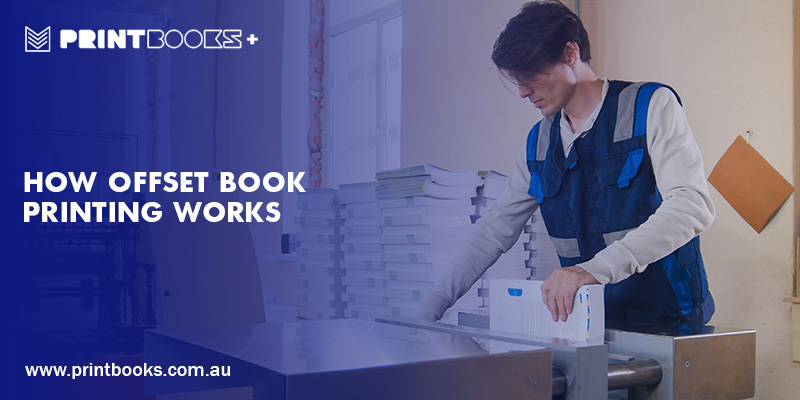
How Offset Book Printing Works

The most frequent printing method used for big volume commercial tasks is offset printing, often known as lithography. Have you ever seen videos of newspapers being rolled up in large rolls? That is what offset printing looks like.

This is how it goes: one metal plate is burned with the design by the printer for each colour. Offset printing enables the use of unique ink colours, most notably Pantone colours, in addition to the conventional four colours (cyan, magenta, yellow, and black (key), or CMYK).

After that, rubber rollers receive the design from the plates. The various ink shades are applied to the rubber, and the paper is then passed through them. To create the final image, the paper layers on colour as it moves through each roll.

Advantages of choosing offset printing

Superior and trustworthy image quality

Offset printing delivers clear, distinct letters and images free of smudges or blemishes.

Better Colour Fidelity

This is also known as colour accuracy and colour balance in the design and relates to the correctness of the colours. Offset printing will naturally produce accurate colour since it can mix unique colour inks for each project.

Equally effective on all materials

This type of printing allows you to have a plethora of materials to choose from without losing out on any quality.

Cost-effective

You get more value for your money on projects with high volume. An offset work starts out very expensive. The plates must be made, which costs money and requires time. Once you’ve invested the money, though, all the materials are prepared, and you’ll spend less on large offset works than on digital prints, which cost roughly the same per piece regardless of how big the job gets.

Offset Book Printing

Disadvantages of Offset Printing

Not fit for low-volume projects

With offset printing, low-volume jobs are expensive due to the initial setup costs.

Time-consuming

You might be stuck with a longer schedule since the plates need to be made.

Worse Fallout

A batch is difficult to repair as you must start the procedure all over again if you miss a typo on a plate, leading to worse consequences in the event of a mistake.

How Digital Book Printing Works

Digital printing more user-friendly. Recall the offset printing pre-press set-up? With digital printing, the entire step vanishes. Instead, one of two techniques, laser or inkjet is employed by these printers. The internal operations of the machine are a little more complex. In general, it entails dotting hundreds of dots of colour directly onto the paper.

Instead of using plates like offset printing does, digital printing can also use toner (found in laser printers) or larger printers that use liquid ink. When printing in smaller quantities, such as a run of 20 greeting cards or 100 flyers, digital printing excels. The capacity to print with varied data is another advantage of digital printing. Each component requires a distinct code, name, or address. This need cannot be met by offset printing.

While offset printing is a great way to create stunning print projects, the best option for many organisations or individuals who don’t need big quantities of 500 or more is digital printing.

Benefits of digital printing

Quick printing

The lack of a setup process allows for a faster turnaround time.

Identical Printing

Every print is the same. You have a lower danger of variances brought on by ink and water imbalances.

Perfect for Low volume

While it is the most cost-effective solution for when you don’t have too many copies to print, the costs eventually criss-cross because offset printing has a lower cost per unit.

Customising certain fields

Digital printing allows you to alter certain fields in each single copy, making it perfect for invites, tickets and other materials that require personalisation.

Disadvantages of Digital Printing

Lack of materials

There are fewer choices for the materials you can print on.

High cost for high volume

Digital printing is not suitable for massive projects

Lower Quality

In comparison, digital printing has less sharpness, crispness, and quality.

There’s no wrong answer!

Whether you choose Offset or Digital printing, it depends on the type of project you’re working on. If you still have questions, our team here at Print Books make book printing in Australia much easier. We are happy to help and provide our 20+ years of experience in digital book printing and hardback printing. We’re the top booklet printers in Melbourne, and pride ourselves in the expertise and service we provide.
Have your manuscript ready?

Standard vs. Custom Book Dimensions: How to Choose the Perfect Size for Your Book

  Why Book Dimensions Matter More Than You Think When authors think about publishing a book, they often focus on the manuscript, cover desig...